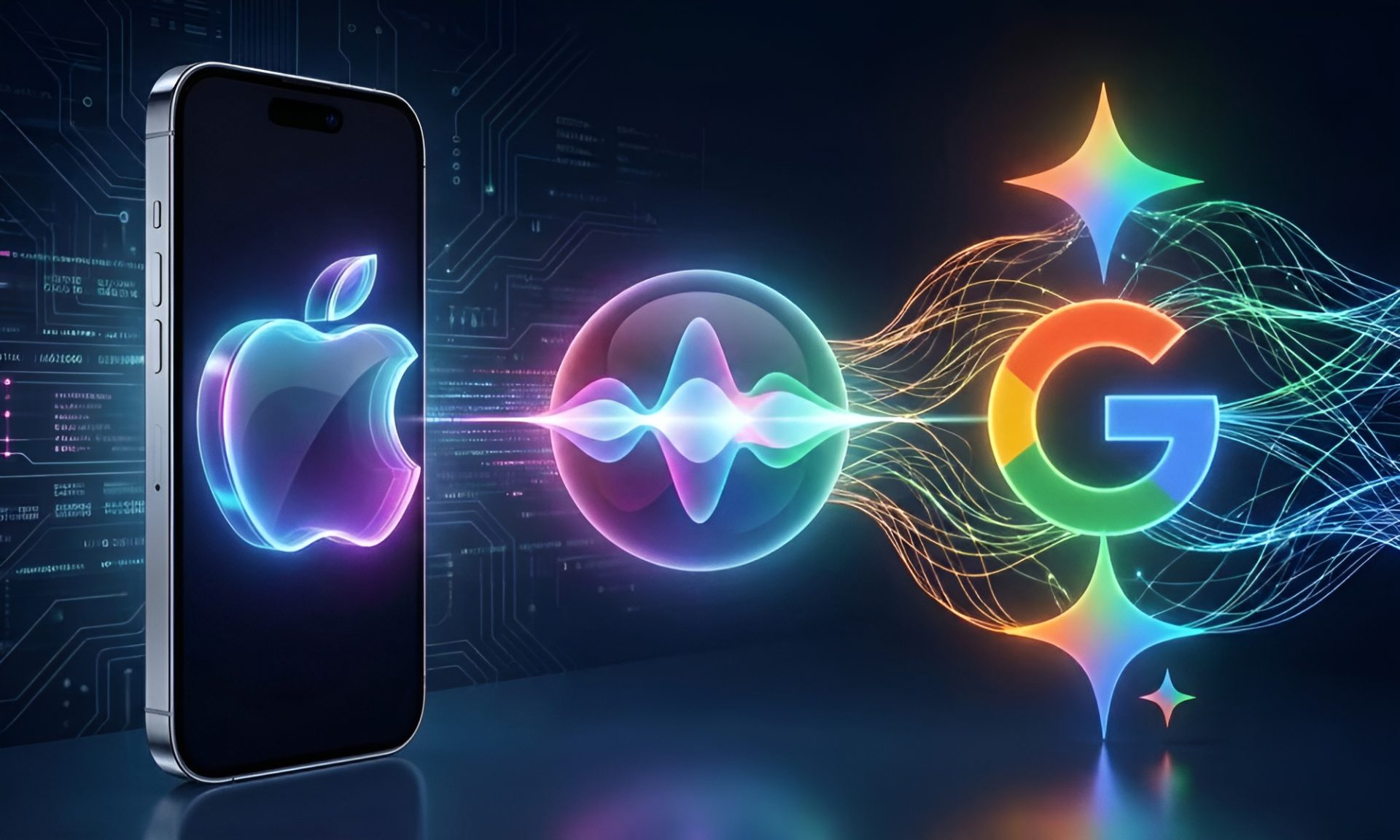
Apple and Google appear to have a symbiotic relationship, with Apple using its unrivaled financial power to gain access to Gemini’s highly capable AI models. And this mutual synergy appears to be strong enough to merit a special mention and prime time for Apple at its Google Cloud Next 2026 event.
Apple has just become one of Google Cloud’s most important customers
Google used Apple as a very important and profitable tool to demonstrate the power of its Gemini AI model at the recently concluded Google Cloud Next 2026 event.
This comes as the Cupertino-based tech giant recently signed a secret deal with Google that may be worth up to $5 billion early on, and is expected to become increasingly profitable as time goes on.
Under the terms of the deal, Apple will pay Google about $1 billion a year as a kind of licensing fee to deploy its giant custom Gemini AI model with 1.2 trillion parameters on Apple’s private servers, where it will help process more complex AI requests using encrypted and stateless data to preserve user privacy.
What’s more, Apple’s updated Siri chatbot that will launch with iOS 27 is slated to run on Google’s own TPU and cloud infrastructure, albeit under Apple ownership. The iPhone maker emphasized that the arrangement will not result in changes to Apple’s strict privacy protections.
The Siri chatbot will reportedly utilize a much more advanced version of Google’s Gemini model, known internally as Apple Foundation Models version 11. According to Bloomberg’s Mark Gurman, the model is expected to compete with the Gemini 3.
Against this favorable backdrop, it’s not surprising that Google would try to shine a special spotlight on iPhone manufacturers at its cloud-focused event.

About the author: Writing is one of my undeniable passions. Over the past six years, he has written more than 2,200 different articles on finance and technology-related topics, spanning nearly 1 million words. And he has been a member of Wcctech’s mobile team since 2025. As an alumnus of the University of Toronto, Rotman Commerce Program, I bring nuance, deep knowledge and a unique perspective to every topic I cover. When I’m not writing, I travel the world, exploring hidden gems and restaurants as an aspiring food connoisseur.
Follow Wccftech on Google to get more of our news coverage in your feed.
PakarPBN
A Private Blog Network (PBN) is a collection of websites that are controlled by a single individual or organization and used primarily to build backlinks to a “money site” in order to influence its ranking in search engines such as Google. The core idea behind a PBN is based on the importance of backlinks in Google’s ranking algorithm. Since Google views backlinks as signals of authority and trust, some website owners attempt to artificially create these signals through a controlled network of sites.
In a typical PBN setup, the owner acquires expired or aged domains that already have existing authority, backlinks, and history. These domains are rebuilt with new content and hosted separately, often using different IP addresses, hosting providers, themes, and ownership details to make them appear unrelated. Within the content published on these sites, links are strategically placed that point to the main website the owner wants to rank higher. By doing this, the owner attempts to pass link equity (also known as “link juice”) from the PBN sites to the target website.
The purpose of a PBN is to give the impression that the target website is naturally earning links from multiple independent sources. If done effectively, this can temporarily improve keyword rankings, increase organic visibility, and drive more traffic from search results.
