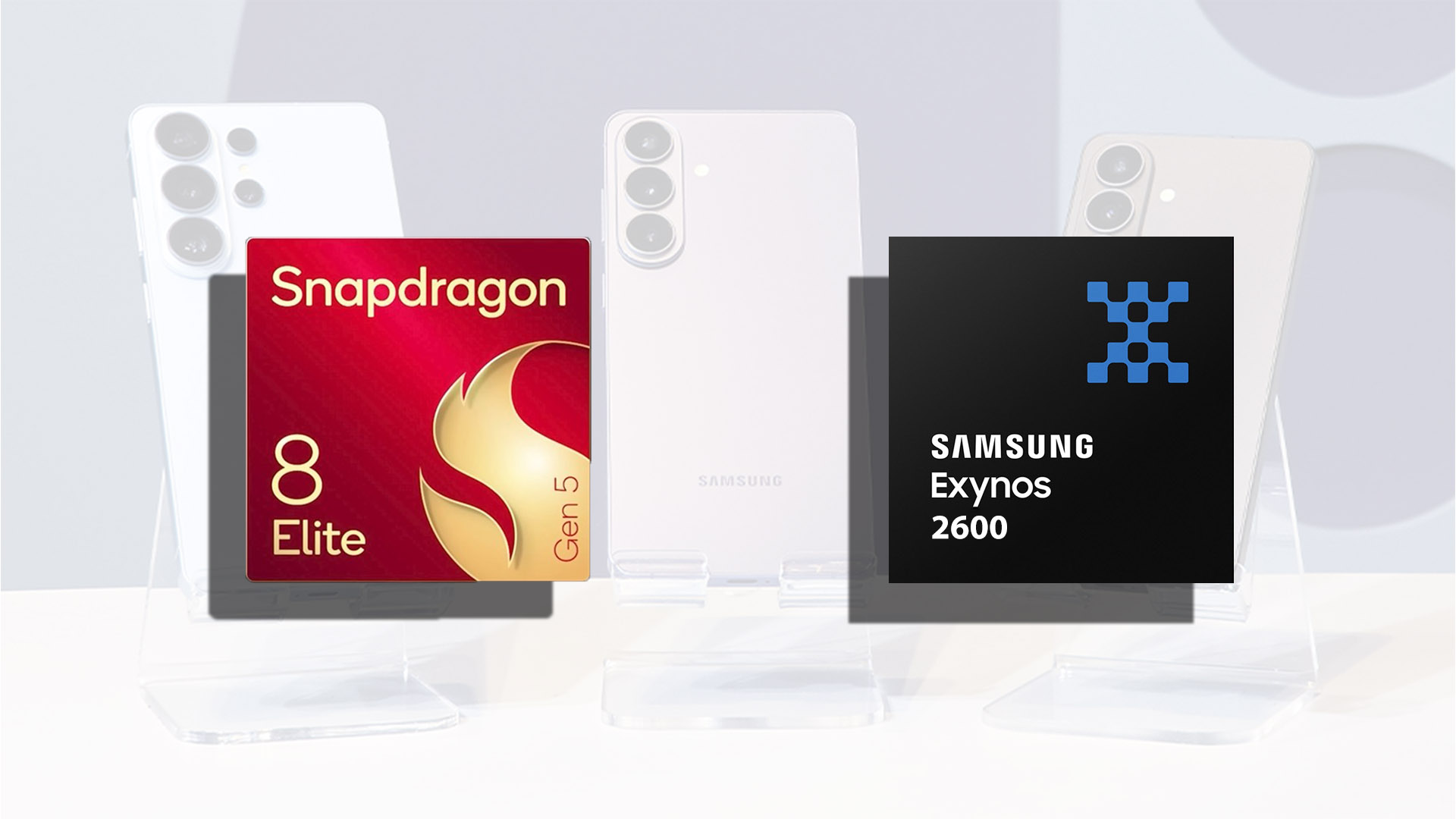
The many benchmark leaks surrounding the Exynos 2600 give us a glimmer of hope for Samsung’s first 2nm GAA chipset, and it should be known that the SoC will be compared to the Qualcomm Snapdragon 8 Elite Gen 5 shortly after the Galaxy S26 series officially launches. Well, here’s your first comparison of synthetic performance results, where both silicon have been tested using Geekbench 6’s single-core, multi-core, and OpenCL benchmarks, with the Exynos 2600 having the faster GPU, but the slower CPU.
Snapdragon 8 Elite Gen 5 for Galaxy up to 18% faster than Exynos 2600 in Geekbench 6 single-core & multi-core results
The official Geekbench 6 computing results posted by @GadgetsBoy show that the Galaxy S26 Ultra is equipped with Snapdragon 8 Elite Gen 5 for Galaxy, although he did not specify whether the other device is the Galaxy S26 or Galaxy S26+. In any case, we finally got our first look at how the Exynos 2600 performs in the Geekbench 6 compute results below, with the Snapdragon 8 Elite Gen 5 for Galaxy up to 18.2 percent faster.
Luckily, Samsung’s 2nm GAA SoC uses an Xclipse 960 GPU, which uses a customized version of AMD’s RDNA4 architecture and gives the graphics processor an edge over its competitors in OpenCL Geekbench 6 results. It’s worth noting that Vulkan testing was not performed, so we can take a closer look at the numbers from the different APIs. As a reminder, the Exynos 2600 is faster than the Adreno iGPU Snapdragon X Elite on OpenCL, but slower on Vulkan.


Exynos 2600
- Single core score – 3,105
- Multi-core score – 10,444
- OpenCL Score – 24,240
Snapdragon 8 Elite Gen 5 for Galaxy
- Single core score – 3,670 (18.2 percent faster)
- Multi-core score – 10,981 (5.14 percent faster)
- OpenCL Score – 24,152
Despite the Exynos 2600’s claims of wins and losses, Geekbench 6 only ran a handful of times, which doesn’t paint the full performance picture. One of the advantages of Samsung’s in-house SoC is that it comes with the company’s proprietary Heat Pass Block (HPB), which is a copper heatsink placed directly on top of the die to help transfer heat faster. This implementation could help the Exynos 2600 perform significantly better in sustained workloads, but we’ll provide those metrics later, so stay tuned.
News Source: @GadgetsBoy
Follow Wccftech on Google to get more of our news coverage in your feed.
Berita Terkini
Berita Terbaru
Daftar Terbaru
News
Berita Terbaru
Flash News
RuangJP
Pemilu
Berita Terkini
Prediksi Bola
Technology
Otomotif
Berita Terbaru
Teknologi
Berita terkini
Berita Pemilu
Berita Teknologi
Hiburan
master Slote
Berita Terkini
Pendidikan
Resep
Jasa Backlink
Slot gacor terpercaya
Anime Batch
