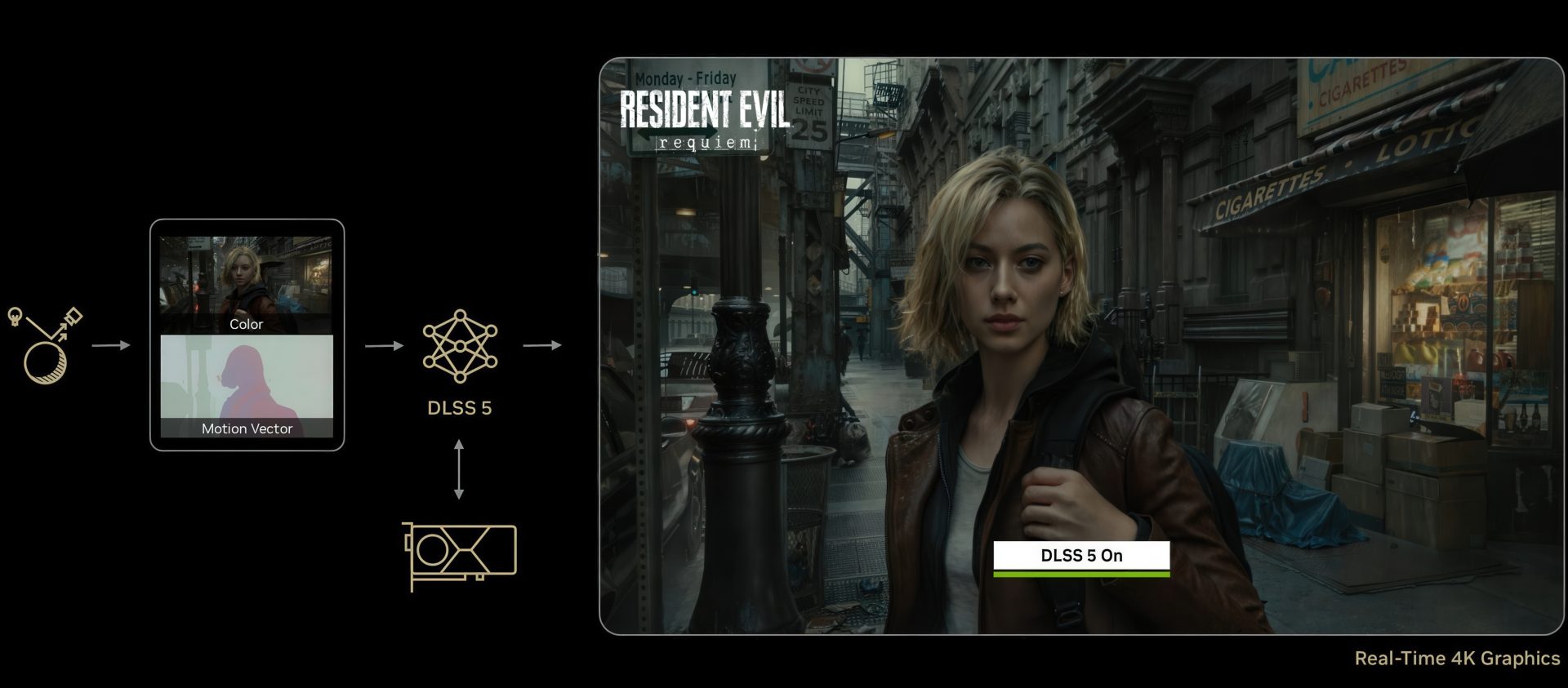
Disclosure NVIDIA DLSS 5 certainly didn’t make anyone flinch. Among the people who praised him as one of the most impressive demos and as a next generation moment for graphicsand the backlash from many who thought it was nothing more than that AI filters that ruin a game’s original artistic visionthe debut of this technology in the GTC 2026 has undoubtedly riled gamers on both sides of the argument.
In the midst of heated public debate, it can be difficult to find the right point of view. That’s what I’m looking for when I reach out Pascal Gilcheralso known as Marty McFlyRenowned rendering engineer, artist, and modder best known for creating the first and arguably the best RTGI shaders for Re-Shading. Since RTGI’s original release in May 2019, shaders, through their various iterations, have been used to enhance the graphics of older PC games with screen space ray tracing effects.
Eventually, it became so popular that NVIDIA added it to its GeForce Experience Freestyle series of graphics filters. The GeForce company is already familiar with Gilcher’s work, who previously an NVIDIA employee. Needless to say, this makes him a great choice to give us a technically sound and relevant opinion on DLSS 5. As you’ll read in the full quote below, Gilcher was impressed by the technology on one handbut also shared the bad AI sentiments expressed by othersadding that there was “zero elegance” for this kind of approach.
I think it’s impressive technology, but I also share the same sentiment with the “AI glitch.” I doubt these models, given how they work, can be tampered with so as not to create false faces and that sort of thing. They are required to provide invasive results… but not invasive. The way I suspect it works is this: they need some sort of thing before training the model. These should be both unrealistic and photorealistic images. But… how to create various pairs of images like that? The answer is GANs. They may have a large collection of game screenshots and many images from photos. That’s where the “Instagram” style that each face has comes from.
They trained a large model to distinguish between real and fake. Then they trained a smaller model to turn the unrealistic images into realistic images and trick the larger model. They can also use very large models for that, because the only goal is to get pairs of realistic and unrealistic images in a 1:1 ratio, then they can filter the smaller models to learn to imitate them.
In general, I think all AI these days is very boring. I know that there is a lot of research on ML models and I have experience with it, but even with a strong math background, it feels like wandering in the dark. There’s no elegance with this, just throwing the computing problem from a different angle. It’s very lame, which seems to be the spirit of a lot of technology these days.
We’re actively working to engage with more developers, engineers, and artists to find out what they think about DLSS 5. If you’re in the industry or a modder and want to share your thoughts about it, feel free to contact us via email.
In case you were wondering, Gilcher is still very active in the modding world. Although sadly there are no updates to the promising ReShade path tracker showcased over two years ago The Elder Scrolls V: Skyrimwhich was the subject of my previous interview with Gilcher, the modder has just released a completely rewritten version iMMERSE Pro: Depth of Field shaders, which he claims to visually beat Unreal Engine’s Depth of Field while remaining competitive in performance thanks to a highly efficient software-based implementation Variable Rate Shading (VRS) DirectX 12.
Gilcher also promises “highly accurate” autofocus that consistently locks on to the intended subject. You can see the Depth of Field shader in the embedded video below; it is available to Patreon subscribers of “RAYTRACKER” rate (€4.50 monthly) and above.
Follow Wccftech on Google to get more of our news coverage in your feed.
PakarPBN
A Private Blog Network (PBN) is a collection of websites that are controlled by a single individual or organization and used primarily to build backlinks to a “money site” in order to influence its ranking in search engines such as Google. The core idea behind a PBN is based on the importance of backlinks in Google’s ranking algorithm. Since Google views backlinks as signals of authority and trust, some website owners attempt to artificially create these signals through a controlled network of sites.
In a typical PBN setup, the owner acquires expired or aged domains that already have existing authority, backlinks, and history. These domains are rebuilt with new content and hosted separately, often using different IP addresses, hosting providers, themes, and ownership details to make them appear unrelated. Within the content published on these sites, links are strategically placed that point to the main website the owner wants to rank higher. By doing this, the owner attempts to pass link equity (also known as “link juice”) from the PBN sites to the target website.
The purpose of a PBN is to give the impression that the target website is naturally earning links from multiple independent sources. If done effectively, this can temporarily improve keyword rankings, increase organic visibility, and drive more traffic from search results.
